If you’re searching for 12 foods to avoid with arthritis, you’re probably wondering whether your daily meals could be making your joint pain worse. While food doesn’t cause arthritis, certain dietary choices may increase inflammation, contribute to weight gain, or trigger flare-ups in some people.
Arthritis includes more than 100 conditions that affect the joints, with osteoarthritis and rheumatoid arthritis being the most common. Medication, exercise, and medical care remain the foundation of treatment, yet a healthy diet can also play an important role in managing symptoms.
The good news is that you don’t have to eliminate every food you enjoy. Instead, learning which foods may aggravate arthritis can help you make informed choices that support your overall health.
Why Diet Matters for Arthritis
Not every person with arthritis reacts to the same foods. Even so, research suggests that some dietary patterns promote inflammation, while others help reduce it.
A balanced eating plan may help by:
- Supporting a healthy body weight
- Reducing inflammation
- Protecting heart health
- Improving energy levels
- Supporting overall joint function
For people living with arthritis, small dietary changes often work better than strict or short-term diets.
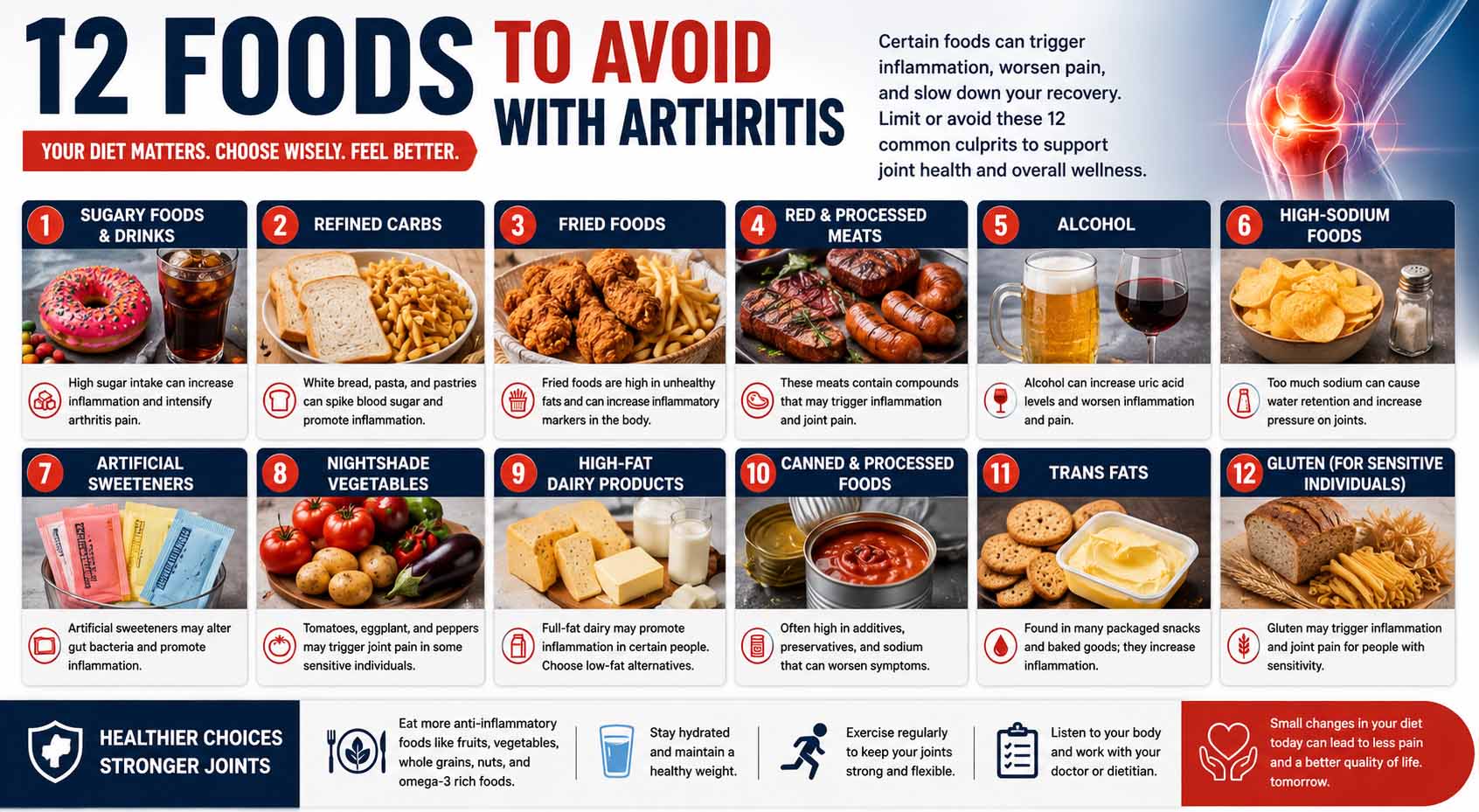
12 Foods to Avoid with Arthritis
Although no single food is responsible for arthritis symptoms, these foods are commonly associated with increased inflammation or poorer joint health.
1. Sugary Drinks
Soft drinks, sweetened teas, energy drinks, and fruit-flavored beverages often contain large amounts of added sugar.
Too much added sugar may:
- Promote inflammation
- Increase body weight
- Raise the risk of chronic diseases
Replacing sugary drinks with water, sparkling water, or unsweetened tea is a simple first step.
2. Processed Meats
Bacon, sausage, hot dogs, and deli meats are often high in saturated fat, sodium, and preservatives.
Frequent consumption may contribute to chronic inflammation and other health concerns.
Choose lean poultry, fish, beans, or lentils more often instead.
3. Fried Foods
French fries, fried chicken, and deep-fried snacks contain unhealthy fats that may increase inflammatory markers.
Baking, grilling, steaming, or air frying are healthier cooking methods that can help reduce unnecessary fat intake.
4. Refined Carbohydrates
White bread, pastries, cookies, and many packaged snacks quickly raise blood sugar levels.
These foods provide calories with little nutritional value and may contribute to weight gain, placing additional stress on painful joints.
Whole grains are generally better choices for long-term health.
5. Foods High in Added Salt
Many canned soups, frozen meals, packaged snacks, and processed foods contain excessive sodium.
While sodium doesn’t directly cause arthritis, too much salt may contribute to fluid retention and increased blood pressure. Reading food labels can help you reduce unnecessary intake.
6. Alcohol
Heavy alcohol consumption may worsen inflammation and interfere with certain arthritis medications.
If you drink alcohol, discuss safe limits with your healthcare provider, especially if you take methotrexate or other medications that affect the liver.
7. Highly Processed Snack Foods
Chips, crackers, packaged desserts, and convenience foods often combine refined flour, unhealthy fats, excess sodium, and added sugar.
Eating these foods occasionally is unlikely to cause problems, but making them a daily habit may contribute to inflammation over time.
8. Foods High in Saturated Fat
Butter, full-fat dairy products, fatty cuts of beef, and processed baked goods are common sources of saturated fat.
Replacing some of these foods with healthier fats from olive oil, nuts, seeds, and fish may support better heart and joint health.
For example, the benefits of cod liver oil are often discussed because it naturally contains omega-3 fatty acids and vitamins A and D. While it is not a treatment for arthritis, omega-3 fats have been studied for their role in supporting normal inflammatory responses.
9. Excessive Sweets
Candy, cakes, doughnuts, and desserts can significantly increase added sugar intake.
Rather than eliminating sweets completely, consider saving them for occasional treats and focusing on naturally sweet fruits most of the time.
10. Some Highly Processed Frozen Meals
Convenience meals often contain large amounts of sodium, preservatives, and unhealthy fats.
Preparing simple meals at home more often allows you to control ingredients and portion sizes.
11. Foods That Contribute to Weight Gain
Extra body weight increases pressure on weight-bearing joints, especially the knees, hips, and ankles.
Rather than focusing on one specific food, aim to reduce frequent intake of:
- Sugary snacks
- Fast food
- Oversized portions
- Ultra-processed foods
Even modest weight loss may reduce joint pain in people with osteoarthritis.
12. Foods That Trigger Personal Sensitivities
Some people notice symptom flare-ups after eating specific foods such as gluten, dairy, or nightshade vegetables like tomatoes and peppers.
Scientific evidence remains mixed, and these foods do not affect everyone with arthritis.
Foods That May Support Joint Health
Avoiding trigger foods is only part of the picture. Choosing nutrient-rich foods every day can also benefit overall health.
Consider adding:
| Food | Potential Benefit |
|---|---|
| Fatty fish | Provides omega-3 fats |
| Berries | Rich in antioxidants |
| Leafy greens | Contain vitamins and minerals |
| Olive oil | Source of healthy monounsaturated fats |
| Nuts | Healthy fats and plant protein |
| Beans | Fiber and nutrients |
| Whole grains | Long-lasting energy |
If you’re looking to improve your diet overall, eating more foods high in fiber may support digestive health, heart health, and healthy weight management, all of which can indirectly benefit people living with arthritis.
Can Certain Vegetables Help?
Vegetables are an essential part of an anti-inflammatory eating pattern.
Colorful vegetables supply antioxidants that help protect cells from oxidative stress.
For example, the health benefits of asparagus include fiber, folate, vitamin K, and antioxidants that support overall wellness. While asparagus is not a cure for arthritis, it fits well into a balanced diet focused on whole foods.
Are Sulfur-Containing Foods Good for Arthritis?
Some people are interested in foods that naturally contain sulfur because sulfur is involved in building connective tissue.
Examples include:
- Garlic
- Onions
- Broccoli
- Cabbage
- Eggs
If you’d like to learn more, our guide to sulfur rich foods explains where these nutrients are found and how they contribute to a healthy diet. Current research does not show that sulfur-containing foods alone can treat arthritis, but they can be part of nutritious eating habits.
Other Lifestyle Habits That Help Manage Arthritis
Diet works best alongside other healthy habits.
Many people benefit from:
- Regular low-impact exercise
- Strength training
- Stretching
- Good sleep
- Stress management
- Maintaining a healthy weight
- Taking medications exactly as prescribed
Activities such as swimming, cycling, yoga, and walking are often easier on painful joints than high-impact exercise.
Should You Avoid Potassium?
People with arthritis sometimes ask whether they should limit potassium-rich foods.
For most individuals, the answer is no.
Potassium supports normal muscle and nerve function, and healthy kidneys regulate potassium levels effectively. However, certain medical conditions or medications may require dietary changes.
If your healthcare provider recommends restrictions, our article on high potassium foods to avoid offers guidance for people with specific medical needs rather than arthritis itself.
Common Myths About Arthritis and Food
Myth: Tomatoes always make arthritis worse.
Some individuals may notice personal sensitivities, but this is not universal.
Myth: One food causes arthritis.
Arthritis develops for many reasons, including aging, genetics, immune system disorders, previous joint injuries, and lifestyle factors.
Myth: Diet can replace medication.
Healthy eating supports overall health, but it does not replace medical treatment prescribed by your healthcare provider.
When Should You See a Healthcare Professional?
Contact a healthcare provider if you experience:
- Persistent joint swelling
- Severe pain
- Joint redness and warmth
- Fever with joint pain
- Difficulty moving a joint
- Symptoms that interfere with daily activities
Early diagnosis helps protect joint function and allows treatment to begin sooner.
Frequently Asked Questions
What is the worst food for arthritis?
There isn’t one single worst food. Sugary drinks, processed meats, fried foods, and highly processed snacks are among the most common foods associated with increased inflammation.
Can diet cure arthritis?
No. Diet cannot cure arthritis, but healthy eating may help manage symptoms and support overall well-being.
Should I avoid all dairy?
Not necessarily. Unless dairy consistently worsens your symptoms or you have an intolerance, moderate dairy intake can still fit into a healthy diet.
Is coffee bad for arthritis?
Current research does not show that moderate coffee intake worsens arthritis for most people. Individual tolerance varies.
How long does it take to notice dietary changes?
Some people notice improvements within a few weeks after adopting healthier eating habits, while others may see more gradual changes. Results vary depending on the type of arthritis and overall treatment plan.
Simple Steps for Healthier Joints
Managing arthritis is about more than avoiding a handful of foods. A balanced diet filled with vegetables, fruits, whole grains, lean proteins, and healthy fats can support overall health while helping you maintain a healthy weight and reduce inflammation.
Instead of trying restrictive diets, focus on sustainable eating habits you can maintain for years. Pair those choices with regular physical activity, good sleep, and appropriate medical care to give your joints the best possible support.